Forward head posture is one of the most common patterns we see in practice — and one of the least understood.
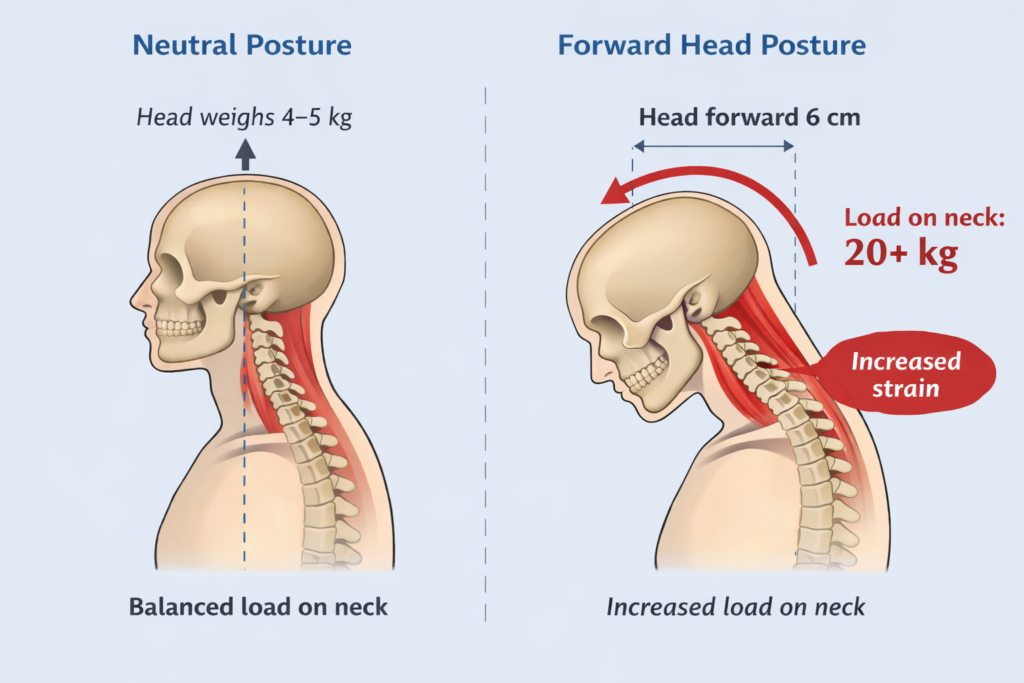
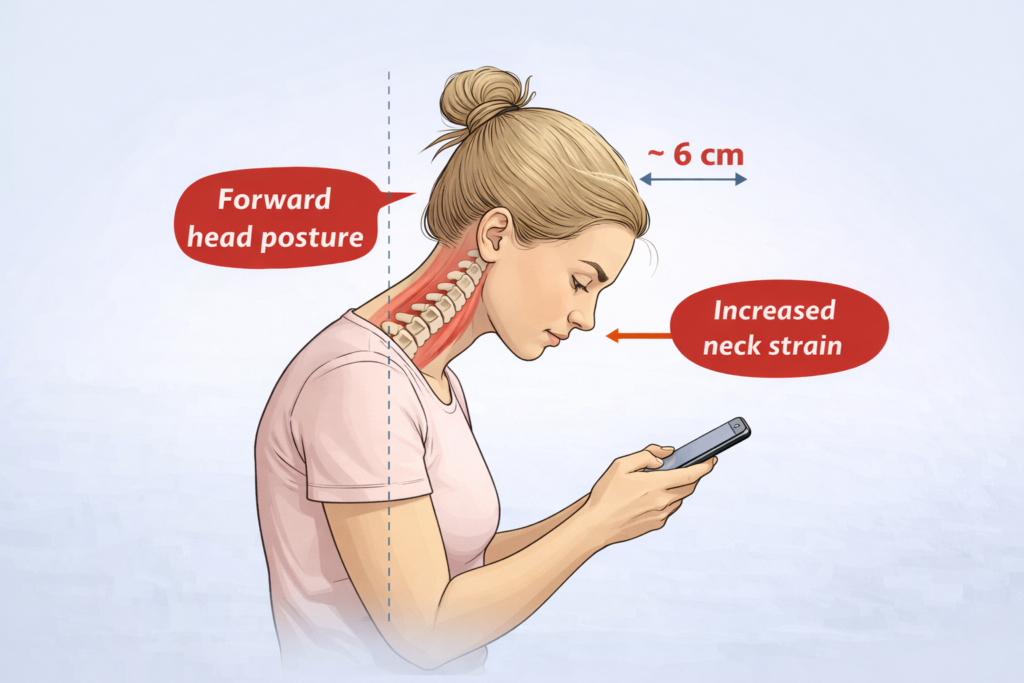
Most people don’t realise this, but your head weighs around 4–5 kilograms. That’s no problem when it’s balanced comfortably over your spine. The issue arises when the head drifts forward, even slightly, during everyday activities like reading, scrolling on a phone, working on a laptop, or driving.
This isn’t about doing something wrong.
It’s simply about load, time, and repetition.
Why forward head posture increases neck strain
As the head moves forward, the muscles at the back of the neck and upper shoulders must work harder to support its weight. The joints, discs, and soft tissues of the lower neck and upper back also experience increased compression.
The further forward the head sits, the greater the load.
What most people notice first isn’t sharp pain, but:
-
a sense of tightness or fatigue in the neck
-
stiffness that builds as the day goes on
-
reduced ease of turning or looking up
-
headaches that feel like tension rather than throbbing pain
These are often early signals, not injuries.
Forward head posture tends to develop gradually, which is why symptoms often feel vague, intermittent, or difficult to pinpoint at first.
Common signs linked to forward head posture
In practice, people commonly describe:
-
neck or shoulder tightness by mid to late afternoon
-
stiffness between the shoulder blades
-
headaches starting at the base of the skull
-
feeling “compressed” rather than acutely sore
-
restless sleep or difficulty finding a comfortable position
Symptoms often fluctuate. They may improve with movement or weekends away from the desk, then return during busy work periods. That pattern tells us a lot about the underlying cause.
Is forward head posture just “bad posture”?
Not really.
Posture isn’t something to hold rigidly or correct forcefully. It’s dynamic — constantly changing as you move, breathe, and shift positions throughout the day.
Forward head posture usually reflects:
-
sustained screen use
-
limited movement variety
-
accumulated fatigue rather than weakness
-
reduced tolerance to sustained positions
Trying to “sit up straight” all day often leads to more tension, not less.
What matters far more than perfect posture is:
-
how long a position is held
-
how often you move
-
whether your neck and upper back have enough mobility and capacity to cope with daily loads
What actually helps reduce strain
Simple, practical strategies tend to be the most effective:
-
changing positions regularly rather than staying fixed
-
bringing screens closer to eye level where possible
-
taking short movement breaks during prolonged sitting
-
walking regularly during the day
-
maintaining mobility through the neck, upper back, and shoulders
Addressing forward head posture early — before pain becomes persistent — often makes recovery simpler and more sustainable.
A steady, measured approach
If you’re feeling good and moving well, that’s exactly where we want you to be.
If you’re noticing recurring neck tension, stiffness, or headaches that keep returning, a personalised assessment can help identify where strain is building and how to reduce it calmly and practically — without overcorrecting or overthinking posture.
Your body is very adaptable.
Sometimes it just needs a little guidance.





