
Back problems are a major health issue in Australia, accounting for 4.3% of the country’s total disease burden in 2023 and costing an estimated $3.4 billion in 2020–21 for treatment and management[1]. Low back pain is also common worldwide, affecting around 619 million people in 2020, a number expected to rise to 843 million by 2050, making it one of the leading causes of disability globally[2].
With back conditions contributing heavily to disability, it’s no surprise that many people are looking for safe, non-surgical ways to manage their pain. Chiropractic care can be an excellent option for easing discomfort, improving movement, and supporting long-term spinal health.
Understanding herniated, bulging, and slipped discs
Your spine is cushioned by discs, which act like shock absorbers and let your back and neck move freely. Each disc has a tough outer ring and a soft, gel-like centre. A herniated disc, sometimes called a slipped or ruptured disc, happens when the inner gel pushes through the outer layer, pressing on nearby nerves and causing pain, tingling, or weakness.
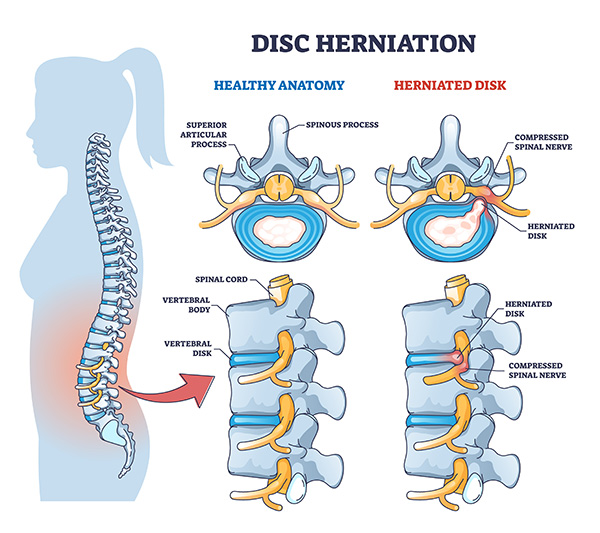
A bulging disc, by comparison, pushes outward but the outer layer stays intact. While the terms are sometimes used interchangeably, herniated discs usually involve a small tear in the outer layer.
What puts discs at risk?
Several factors can make discs more prone to problems. Age naturally reduces disc hydration and elasticity, making tears more likely. Poor posture, repetitive strain, or sudden trauma like falls, sports injuries, or car accidents can also contribute. Lifestyle factors such as a sedentary routine, weak core muscles, excess weight, and smoking can speed up disc degeneration. Your job or genetics may also play a role, especially if you spend long hours sitting or lifting heavy objects.
How a chiropractor can help with a herniated disc
Chiropractors can’t reattach the disc material, but they can help relieve nerve pressure, reduce pain, and improve how your spine moves. A thorough assessment, including your medical history, a physical exam, and sometimes imaging, helps confirm the diagnosis and rule out urgent issues.
A chiropractor may use several approaches to help, including:
Spinal adjustments: Gentle, controlled movements realign vertebrae, ease nerve pressure, improve mobility, and reduce pain.
Flexion-distraction therapy: A specialised table gently stretches your spine, relieving pressure and improving disc hydration.
Soft tissue therapy: Massage, trigger-point release, and other hands-on techniques relax tight muscles, reduce inflammation, and support spinal stability.
Posture and movement guidance: Advice on sitting, standing, lifting, and bending safely. Correcting posture and movement reduces stress on discs and helps prevent future problems.
Targeted exercises: Stretches and strengthening routines stabilise your spine, improve flexibility, and support disc recovery.
Advanced therapies: Spinal decompression machines gently stretch the lower back to relieve nerve compression. Low-level laser therapy or electrotherapy can help reduce inflammation and support tissue repair.
Lifestyle and ergonomic advice: Maintaining a healthy weight, staying active, quitting smoking, and using correct lifting techniques support disc health and prevent recurrence.
Research shows chiropractic care can provide meaningful improvements in comfort and mobility, especially when combined with exercise, posture correction, active recovery, and simple self-management strategies at home. Using these approaches together can help you experience steadier progress and better long-term results.
Signs you may need a chiropractor for a herniated disc
If your back or neck has been bothering you for a while, it could be a herniated disc. The symptoms you notice often depend on which part of your spine is affected.
Neck (cervical) herniation
A cervical herniation can cause sharp or shooting pain that travels from the neck into the shoulders, arms, or hands. You may notice tingling, numbness, or weakness in your arms or fingers. These symptoms can make simple movements, like turning your head or lifting objects, uncomfortable or difficult.
Lower back (lumbar) herniation
A lumbar herniation can cause pain that radiates into the buttocks, legs, or feet, often called sciatica. Tingling, numbness, or weakness in the legs is common, and you may find walking, standing, or sitting for long periods uncomfortable. Everyday activities like bending or climbing stairs can also become challenging.
Getting your spine back on track
Chiropractic care offers a safe, non-invasive option for herniated, bulging, or slipped discs. While it doesn’t repair the disc itself, it eases nerve pressure, reduces pain, and helps restore movement. With the right exercises, posture guidance, and lifestyle changes, chiropractic care can help you get back to your daily activities comfortably and confidently.
If you’re experiencing back or neck pain, book a consultation with a registered chiropractor. Together, you can create a personalised plan to manage your symptoms and support your spinal health. Seek urgent medical care if severe symptoms like changes in bladder or bowel control occur.
References
- Australian Institute of Health and Welfare — Chronic musculoskeletal conditions: Back problems (2024)
https://www.aihw.gov.au/reports/chronic-musculoskeletal-conditions/back-problems - Australian Chiropractors Association — Invest in Your Spine this World Spine Day
https://www.chiro.org.au/invest-in-your-spine-this-world-spine-day/





